Top 10 Influential Doom Metal Bands You Need to Know
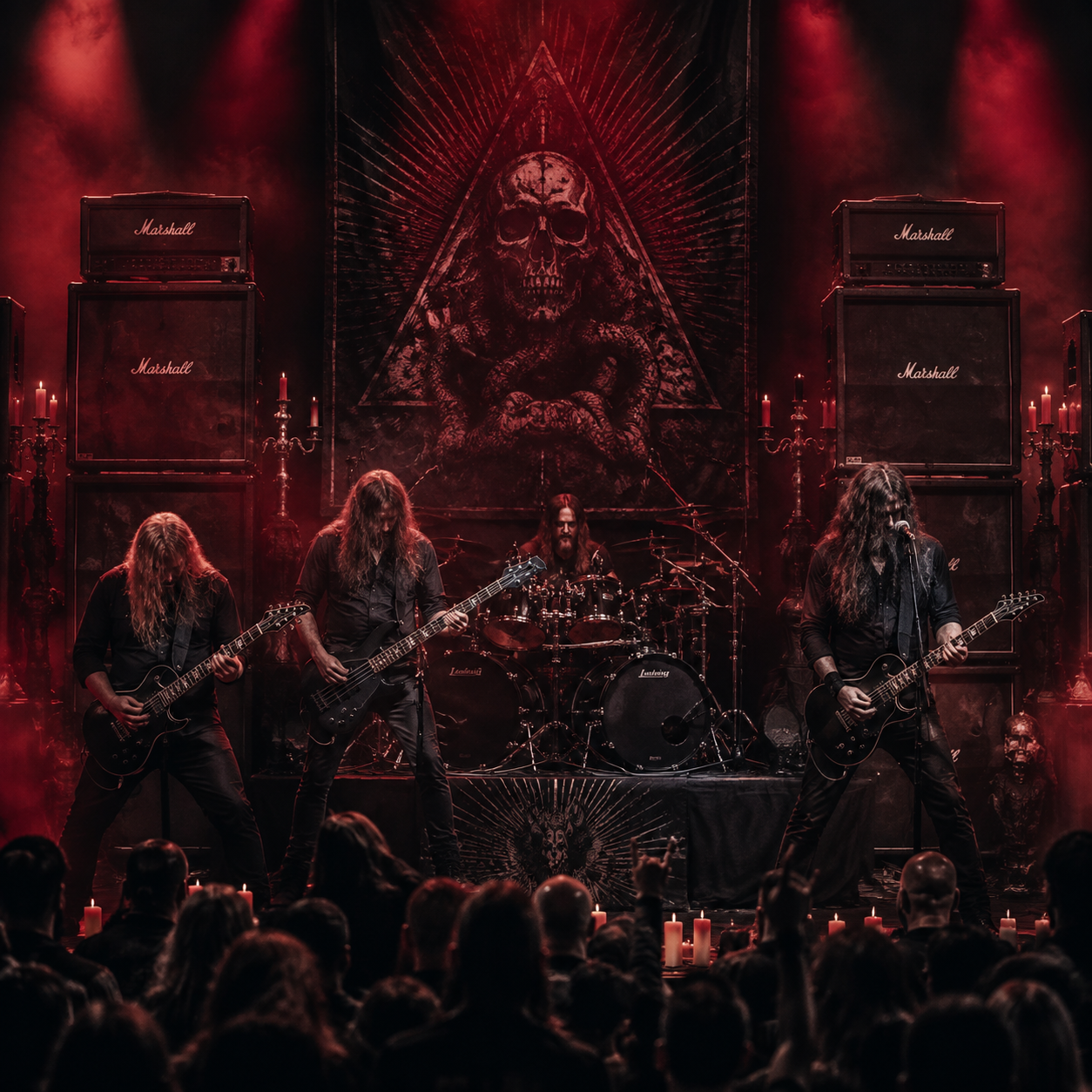
Doom metal turns the weight of heavy metal into an atmosphere: slow tempos, crushing distortion, mournful vocals, and riffs that seem to move with geological force. From Black Sabbath’s early experiments to funeral doom’s near-motionless darkness, the genre has grown into a broad family of sounds.
This list focuses on influence rather than fame alone. Each doom metal band included here changed the language of the style through riff-driven songwriting, distinctive production, powerful imagery, or a contribution to a major subgenre.
What Makes a Doom Metal Band Influential?
A doom metal band is influential when its riffs, songwriting methods, atmosphere, or production inspire other musicians and help define a recognizable branch of the genre. Influence can come from a classic album, a new approach to heaviness, or a scene that gives later bands a foundation to build on.
Doom usually relies on **heavy distortion and slow tempos**, but those traits alone do not explain its impact. A great doom band makes pace feel expressive. A single chord may create dread, grief, grandeur, or physical pressure depending on its timing, tone, and repetition.
- Sound: guitar weight, bass presence, drum patterns, vocal style, and recording choices.
- Songwriting: memorable riffs, patient development, dramatic tension, and strong arrangements.
- Atmosphere: themes of mortality, isolation, occult imagery, despair, or triumph over darkness.
- Expansion: the ability to establish or reshape traditional doom, epic doom, funeral doom, sludge metal, or stoner doom.
That is why a band with a small catalog can matter as much as an internationally known act. In doom, one influential riff can cast a long shadow.
The Foundations of Doom Metal
The foundation of doom metal is Black Sabbath, whose early heavy metal recordings established the slow, ominous, riff-centered language that later bands developed into a distinct genre.
Black Sabbath did not begin with a formal doom metal blueprint. Their importance came from the way Tony Iommi’s guitar riffs, Geezer Butler’s dark lyrical concepts, Bill Ward’s dynamic drumming, and Ozzy Osbourne’s haunted delivery made heaviness feel spacious and threatening. Songs such as “Black Sabbath,” “Electric Funeral,” and “Into the Void” demonstrated how a riff could dominate an entire composition without requiring speed.
Later musicians isolated different parts of that formula. Some emphasized the bluesy, traditional heaviness; others slowed the music further, increased the distortion, or stretched songs into vast atmospheric pieces. The result was a genre with a common center but many distinct directions. The historical overview of doom metal is useful for tracing those connections across decades.
Top 10 Influential Doom Metal Bands
These 10 influential doom metal bands represent major turning points, from the genre’s traditional roots to its epic, funeral, sludge, and stoner forms. The recommended starting points are selected for clarity, impact, and accessibility.
- Black Sabbath
Recommended starting point: Black Sabbath (1970)
Every discussion of doom begins with Black Sabbath. Their self-titled debut and follow-up albums established the core vocabulary: ominous intervals, blues-based riffs, spacious arrangements, and lyrics steeped in war, death, magic, and fear. “Black Sabbath” remains a defining example of how a slow riff can feel almost cinematic. Their influence reaches well beyond doom, but doom metal is where their darkest ideas found their clearest descendants.
- Pentagram
Recommended starting point: Relentless
Pentagram helped preserve and sharpen the underground side of traditional doom. Bobby Liebling’s dramatic vocals and the band’s rough, riff-heavy attack gave their music a dangerous, street-level intensity. Their recordings often sound less polished than later metal productions, yet that rawness is part of their influence. Pentagram showed that doom could be immediate and aggressive without abandoning its slow, heavy foundation.
- Saint Vitus
Recommended starting point: Born Too Late
Saint Vitus translated Black Sabbath’s darkness into a harsher American underground style. Their guitar tone is dry, abrasive, and direct, while the songs carry a sense of alienation and exhaustion. Born Too Late became a key document of traditional doom’s outsider identity. The band influenced generations of musicians who wanted doom to sound less polished, more personal, and closer to hardcore’s independent spirit.
- Trouble
Recommended starting point: Psalm 9
Trouble brought precision, melodic ambition, and a distinctive vocal approach to traditional doom. Their music combines massive riffs with expressive guitar harmonies and lyrics shaped by spiritual and existential themes. Psalm 9 is an accessible entry point because it balances heaviness with clear song structures. Trouble’s influence is especially important for bands that wanted doom to be dramatic and memorable rather than purely bleak.
- Candlemass
Recommended starting point: Epicus Doomicus Metallicus
Candlemass defined **epic doom** by expanding the genre’s scale. Their songs use grand melodies, theatrical vocals, and deliberate arrangements that make each riff feel monumental. The title Epicus Doomicus Metallicus effectively describes the band’s approach: doom with the sweep of classic heavy metal. Candlemass proved that slow music could sound heroic, ornate, and emotionally elevated as well as grim.
- Cathedral
Recommended starting point: Forest of Equilibrium
Cathedral’s debut pushed doom into a more extreme and psychedelic space. Forest of Equilibrium is dense, murky, and deeply unsettling, with Lee Dorrian’s cavernous vocals cutting through enormous guitar textures. The band later explored more progressive and stoner-oriented ideas, but their early work was crucial in connecting death metal’s intensity with doom’s patient pacing.
- Sleep
Recommended starting point: Holy Mountain
Sleep made riff repetition hypnotic. On Holy Mountain, thick fuzz, relaxed drumming, and spacious bass lines create a trance-like version of **stoner doom**. The band’s music feels physically heavy without rushing toward technical complexity. Sleep influenced countless groups by demonstrating that a small number of powerful riffs, played with conviction and carefully controlled dynamics, could sustain an entire album.
- Electric Wizard
Recommended starting point: Dopethrone
Electric Wizard intensified stoner doom’s uglier, more psychedelic side. Dopethrone combines overloaded guitar tone, primitive grooves, horror imagery, and a deliberately oppressive production style. Their influence can be heard in bands that treat distortion as an environment rather than an effect. The trade-off is clear: the same murky sound that creates menace may feel inaccessible to listeners who prefer separation and polish.
- Esoteric
Recommended starting point: The Pernicious Enigma
Esoteric helped define **funeral doom**, a form built around extreme slowness, extended compositions, cavernous sound, and psychological bleakness. Their music often unfolds over long durations, allowing dissonance and atmosphere to become as important as riffs. Esoteric’s contribution lies in treating doom as an immersive sonic space. This is demanding music, but it expanded the genre’s emotional and structural possibilities.
- Neurosis
Recommended starting point: Through Silver in Blood
Neurosis transformed the relationship between doom, sludge metal, hardcore, and post-metal. Their songs build through layered percussion, harsh vocals, spacious guitar passages, and sudden eruptions of noise. Through Silver in Blood is not conventional traditional doom, yet its weight and atmosphere reshaped how extreme bands approached composition. Neurosis showed that heaviness could emerge from dynamics and texture as much as from a slow guitar riff.
How These Bands Shaped Doom’s Subgenres
Doom’s major subgenres developed by emphasizing different parts of the original formula: traditional doom preserves the classic riff language, while epic, funeral, sludge, and stoner doom alter scale, pace, texture, or groove.
- Traditional doom: Pentagram, Saint Vitus, Trouble, and early Black Sabbath emphasize blues-derived riffs, clear song structures, and classic heavy metal weight.
- Epic doom: Candlemass adds dramatic vocals, grand melodies, and a heroic atmosphere to slow songwriting.
- Funeral doom: Esoteric stretches time, deepens the distortion, and uses long-form arrangements to create profound desolation.
- Stoner doom: Sleep and Electric Wizard rely on fuzz, repetition, psychedelic color, and low-slung grooves.
- Sludge metal: Neurosis demonstrates how hardcore aggression, noise, and dramatic dynamics can merge with doom’s mass and pacing.
These categories overlap. A modern doom metal band may combine traditional riffs with funeral pacing, or stoner groove with sludge vocals. Subgenres work best as listening guides rather than strict boxes.
Where to Start Listening
The best entry point depends on the kind of heaviness you want: classic riffs, theatrical scale, psychedelic groove, extreme atmosphere, or abrasive intensity.
- For beginners: Start with Black Sabbath’s Black Sabbath, Candlemass’s Epicus Doomicus Metallicus, or Trouble’s Psalm 9.
- For a hypnotic groove: Choose Sleep’s Holy Mountain, then try Electric Wizard’s Dopethrone.
- For bleak and immersive music: Explore Esoteric, preferably with headphones and enough time for a full-length listen.
- For raw underground heaviness: Try Saint Vitus and Pentagram before moving into harsher sludge recordings.
- For expansive, emotionally intense metal: Listen to Neurosis and follow its path toward post-metal.
A practical listening method is the **three-riff test**: choose one album, listen for its opening riff, its central transition, and its closing section. Doom rewards attention to tone and repetition, so short samples can miss the way a song gradually changes your sense of time.
The Continuing Influence of Doom Metal
Doom metal remains influential because its central ideas are simple, flexible, and difficult to exhaust: slow tempos, enormous tone, memorable riffs, and emotional atmosphere. New bands continue to reinterpret those elements through different production styles, vocal techniques, and connections to black metal, sludge, drone, and psychedelic rock.
The genre’s lasting lesson is patience. Doom does not need constant movement to create momentum. A repeated figure can become more powerful as the listener notices subtle changes in distortion, harmony, drum accents, and vocal delivery.
For newcomers, Black Sabbath is the essential starting point. From there, Candlemass reveals epic doom, Sleep opens the door to stoner doom, Esoteric demonstrates funeral doom’s depth, and Neurosis shows how far doom’s emotional architecture can travel. Together, these bands form a practical map of one of heavy metal’s most durable and influential traditions.
Frequently Asked Questions About Doom Metal
What are the defining characteristics of doom metal?
Doom metal typically uses slow or mid-paced tempos, heavily distorted guitars, prominent bass, dark themes, and riff-driven songwriting. Its emotional center may be mournful, threatening, psychedelic, heroic, or despairing.
Which band is considered the foundation of doom metal?
Black Sabbath is generally considered the foundation of doom metal because its early heavy metal recordings established the slow, ominous, and riff-centered approach that later doom bands developed.
What is the difference between traditional doom and funeral doom?
Traditional doom usually keeps recognizable heavy metal song structures and riff movement. Funeral doom moves much more slowly, often uses very long songs, and focuses on vast atmosphere, minimal motion, and extreme melancholy.
Which doom metal band is best for beginners?
Black Sabbath is the clearest starting point, while Candlemass and Trouble offer accessible examples of traditional and epic doom with strong melodies and relatively direct structures.
How does doom metal differ from sludge and stoner metal?
Doom metal centers on heaviness, slow pacing, and dark atmosphere. Sludge metal adds hardcore aggression, abrasive vocals, and noise, while stoner metal often emphasizes fuzz, groove, psychedelic repetition, and a warmer, more spacious feel.