The Role of Lyrics in Doom Metal: Exploring Themes of Despair and Mythology
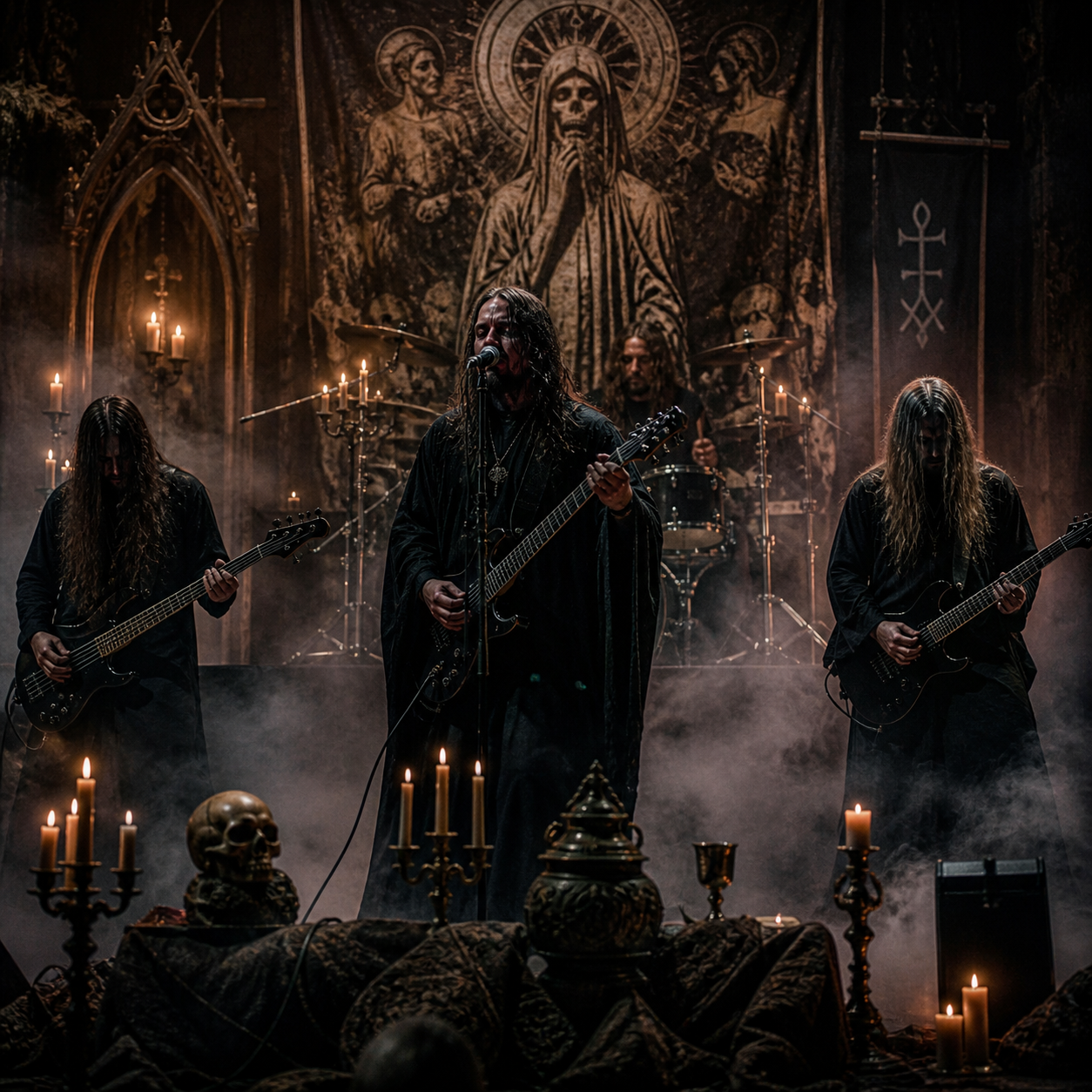
Doom metal is built on weight. The riffs move like tectonic plates. The drums fall like stones into still water. And the lyrics — when they land right — feel less like words and more like something dredged up from a very deep place. This is a genre where the text and the texture are inseparable, where what a vocalist intones matters as much as how the guitar sustains its note into silence.
Why Lyrics Matter More in Doom Metal Than You Might Expect
Doom metal's slow, deliberate pace gives every word room to breathe — and that space transforms lyrics into something closer to ritual than performance. In faster subgenres, vocals can blur into rhythm, becoming another percussive layer. In doom, each syllable lands with full weight. Listeners actually hear the words.
This creates both an opportunity and a responsibility. When a riff repeats for four minutes, the lyrical imagery becomes the primary vehicle for emotional progression. The music holds still while the words do the work of pulling the listener deeper. That's why lyrical intentionality matters so much in this genre — vague or careless writing gets exposed immediately by the silence around it.
Doom also tends toward longer song structures than most metal subgenres. A ten-minute track isn't unusual. That duration invites narrative development, thematic repetition with variation, and the kind of slow emotional build that short songs simply can't achieve. The lyrics have to earn that length.
The Language of Despair — Grief, Loss, and Existential Dread
The emotional core of doom metal lyrics is despair — not as a pose, but as an honest confrontation with grief, mortality, and the terror of meaninglessness. These aren't themes the genre stumbled into; they're central to what doom metal is trying to do.
Grief shows up everywhere in doom lyrics: the loss of a person, the loss of faith, the loss of self. What separates doom's treatment of these subjects from generic sadness is specificity of imagery. The best doom lyrics don't say "I am sad." They describe the weight of an empty room, the way light falls wrong through a window, the silence that follows a name no longer spoken. Concrete images of decay, ruin, and absence do more emotional work than abstract declarations of sorrow.
Existential dread operates differently. It's less personal than grief and more cosmic — the vertigo of realizing that existence itself is indifferent. Doom lyrics often sit in that uncomfortable space between human suffering and the vast, uncaring scale of time and universe. This is where the genre's philosophical dimension lives, and it's what separates doom from metal styles that deal in anger or aggression. Doom doesn't rage against the void. It stares into it.
Mythology as a Lyrical Framework — From Ancient Gods to Cosmic Horror
Mythology gives doom metal's despair a timeless, larger-than-human dimension. When personal grief is placed against the backdrop of Norse cosmology, Greek tragedy, or Lovecraftian cosmic horror, it stops being merely individual and becomes archetypal.
Norse mythology offers doom lyricists a particularly rich vocabulary: the inevitability of Ragnarök, the weight of fate in the Norns' weaving, the long shadow of Odin's sacrifices. These aren't just decorative references. They provide a framework in which suffering has always existed, in which even gods are subject to entropy and ending. That context makes human grief feel both smaller and more dignified — we are part of something ancient.
Greek mythology contributes differently. The tragedy of figures like Orpheus, Sisyphus, or Persephone maps directly onto doom's emotional terrain. The underworld as a literal and metaphorical space, the failed attempt to reclaim what's lost, the cyclical nature of suffering — these are structures that doom lyrics can inhabit without forcing.
Lovecraftian cosmic horror has become increasingly influential in doom, particularly in death-doom and funeral doom. The appeal is clear: Lovecraft's worldview — that the universe is incomprehensibly vast, fundamentally indifferent, and populated by forces beyond human comprehension — aligns almost perfectly with doom's existential themes. The difference is that doom finds something worth expressing in that horror, where Lovecraft's characters only collapse. Occult symbolism and esoteric traditions serve a similar function, lending lyrics a sense of hidden knowledge and ancient power that amplifies the atmosphere of dread.
Death-Doom and Funeral Doom — When Lyrics Become Eulogies
In the subgenres of death-doom and funeral doom, lyrics push past darkness into something that functions like mourning ritual. These are songs that treat mortality not as a theme but as a presence — something the music is actively in conversation with.
Funeral doom in particular strips away almost everything except grief and heaviness. The tempos are glacial. The vocals are often low, chanted, or barely audible beneath layers of drone. In this context, lyrics don't need to be complex — they need to be true. A single repeated line about the finality of death, delivered over twenty minutes of sustained dissonance, can carry more weight than a thousand words of elaborate verse.
Death-doom tends to blend the guttural vocal aggression of death metal with doom's emotional depth, creating a tension between violence and sorrow that feels genuinely unsettling. The lyrics often reflect this duality — oscillating between rage at mortality and a kind of terrible acceptance of it. Mortality as subject matter isn't morbid for its own sake here; it's a way of taking death seriously in a culture that mostly avoids it.
The Craft of Writing Doom Metal Lyrics — Tone, Imagery, and Pacing
Writing doom metal lyrics well requires understanding how tone, imagery, and pacing interact with the music itself. The goal is never decoration — it's integration.
Tone comes first. Doom lyrics need to sustain a consistent emotional register without becoming monotonous. The way to do this is through layered imagery rather than direct statement. Instead of naming the emotion, describe the landscape it inhabits. Ruins. Fog. Ash. Deep water. Stone. These are the visual vocabularies that doom lyrics return to because they carry emotional resonance without explanation.
Pacing is where lyric writing and musical composition become the same conversation. A long, slow phrase that stretches across four beats of a doom riff lands differently than a short, clipped line. The best doom lyrics are written with the music's breath in mind — they expand and contract with the riff, exhale with the sustain, and pause in the spaces between notes.
Repetition is a tool, not a shortcut. Doom's musical structure often involves extended repetition of riffs and motifs. Lyrics can mirror this intentionally, returning to a phrase or image in a way that deepens its meaning with each recurrence. The repeated line at the end of a funeral doom track hits differently than it did at the beginning — the music has transformed it.
Catharsis and Community — Why Dark Lyrics Create Deep Listener Bonds
Dark lyrics create deep listener bonds because they offer something most music avoids: honest acknowledgment of suffering without the pressure to resolve it. Doom metal doesn't promise that things will get better. It sits with you in the darkness, and that act of sitting together is itself a form of relief.
The concept of catharsis — the emotional release that comes from engaging with tragedy — is central to understanding why doom metal fans connect so intensely with the music. There's a long tradition, from Greek drama to the blues, of finding genuine comfort in art that names pain directly. Doom metal operates in that tradition. When a lyric captures a feeling of grief or dread that a listener has carried alone, the recognition is profound. You are not the only one who has felt this. It has been felt before, deeply enough to become art.
This is also why doom metal communities tend to be unusually thoughtful and close-knit. The music selects for listeners who take emotional experience seriously. The shared language of doom lyrics — the imagery, the references, the emotional register — creates a common ground that goes beyond musical taste.
Our Approach to Lyrics — What We Aim to Convey as a Band
We write from the inside of the darkness, not from a safe distance above it. Every lyric we craft starts with a question: does this feel true? Not true in a biographical sense, but emotionally true — the kind of truth that a listener can recognize in their own experience even if the specific circumstances are different.
We draw on mythology because it gives our personal and collective grief a frame that's larger than any single life. When we write about ancient gods or cosmic forces, we're not being theatrical — we're reaching for language that can hold the scale of what we're trying to describe. Human words are often too small for what doom metal is trying to say. Mythology gives us bigger words.
We also believe that lyrical darkness has to be earned. It's easy to write bleak lines. It's much harder to write bleak lines that feel inevitable, that couldn't have been written any other way. That's the standard we hold ourselves to. Not darkness for effect, but darkness because it's honest — because the weight of existence demands it.
Frequently Asked Questions
What are the most common themes in doom metal lyrics?
The most common themes are grief, death, existential dread, mythology, and occultism. Doom metal lyrics frequently explore loss, the passage of time, the indifference of the cosmos, and the weight of mortality — often using imagery of ruins, darkness, void, and ancient forces to give these themes visual and emotional texture.
How does mythology influence doom metal songwriting?
Mythology provides doom metal with a framework that makes personal despair feel timeless and archetypal. Norse, Greek, and Lovecraftian traditions are particularly common because they offer vocabularies of fate, tragedy, and cosmic scale that align naturally with doom's emotional register. Occult and esoteric symbolism serves a similar function, adding layers of hidden meaning and atmosphere.
Is doom metal lyrically different from black metal or death metal?
Yes, significantly. Death metal lyrics often focus on physical violence, gore, or mortality in visceral terms. Black metal tends toward nihilism, anti-religion, or atmospheric abstraction. Doom metal is more emotionally introspective — its lyrics dwell in grief, sorrow, and existential questioning rather than aggression or ideological confrontation. The pace of the music also means doom lyrics are heard more clearly, which raises the stakes for their quality and depth.
Can doom metal lyrics be hopeful or uplifting in any way?
Rarely in a conventional sense, but catharsis itself is a form of relief. Some doom lyrics find a kind of austere acceptance — not hope, but peace with the weight of existence. The act of naming suffering honestly can feel like a form of dignity. That's as close as doom typically gets to uplift, and for many listeners, it's enough.
How important is vocal delivery to the impact of doom metal lyrics?
Vocal delivery is inseparable from lyrical impact in doom metal. The same words sung with urgency versus intoned slowly over a sustained drone produce completely different emotional effects. The pace, texture, and register of the voice — whether clean, distorted, chanted, or barely whispered — are part of the lyric itself. Delivery in doom is less performance and more ritual.