The Origins and Evolution of Doom Metal: A Deep Dive
What Is Doom Metal? Defining the Genre
Doom metal is a heavy metal subgenre built on slow, crushing tempos, down-tuned guitars, and an atmosphere of dread, melancholy, and existential weight. Where thrash metal races and death metal assaults, doom metal leans into deliberate heaviness — using space and slowness as emotional instruments in their own right.
The genre's lyrical themes orbit death, despair, occultism, and introspection. These aren't decorative choices. They reflect a genuine artistic commitment to confronting darkness rather than escaping it. Doom metal invites the listener to sit inside discomfort, to feel the weight of a riff sustain beyond comfort, to let a note decay into silence before the next blow arrives.
Sonically, the defining markers are consistent across eras: heavily distorted, low-tuned guitars, bass-forward production, and vocal styles that range from clean and operatic to guttural and whispered. The tempo is almost always the first thing listeners notice — and it's the last thing they forget.
The Seeds of Doom — Black Sabbath and the Proto-Doom Era
Black Sabbath didn't invent doom metal — they invented the conditions that made it inevitable. The Birmingham quartet's 1970 self-titled debut, particularly the opening tritone riff of "Black Sabbath," established a sonic template that would echo through decades of heavy music.
What separated early Sabbath from the blues-rock of their contemporaries wasn't just volume or distortion. It was intentionality. Tony Iommi's guitar work, shaped in part by a factory accident that cost him the tips of two fingers, leaned into slower, heavier phrasing out of physical necessity. The result was something that felt genuinely ominous — not theatrical darkness, but a sound that seemed to carry actual weight.
Tracks like "Electric Funeral," "Into the Void," and "Symptom of the Universe" from the early 1970s catalog laid the proto-doom blueprint: slow-to-mid tempos, occult lyrical themes, and a production aesthetic that prioritized atmosphere over polish. The underground metal scene absorbed these lessons deeply, and they would resurface in more concentrated form a decade later.
The 1980s — Traditional Doom Takes Shape
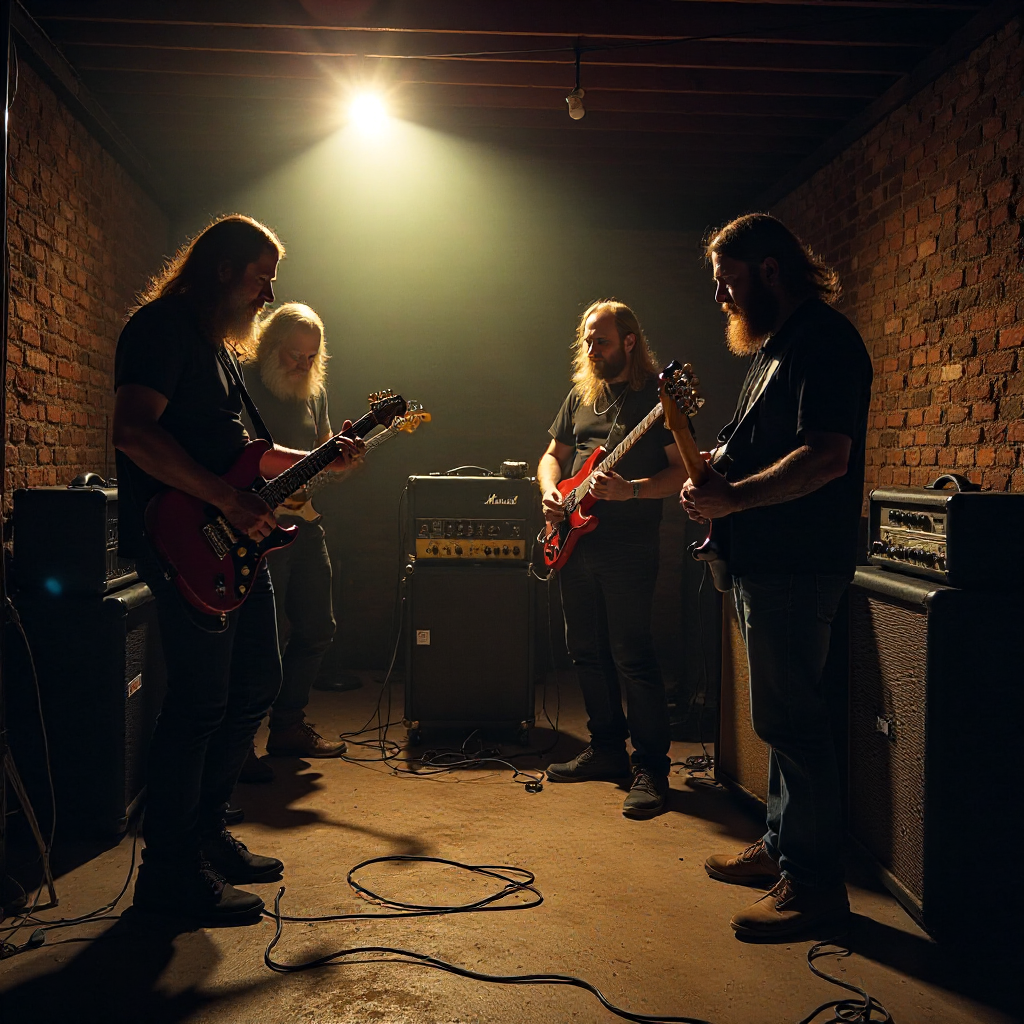
Traditional doom metal crystallized in the 1980s through a handful of bands who took the Sabbath template and pushed it into something more codified and self-aware. Candlemass and Pentagram are the two names most central to this story.
Pentagram, formed in Virginia in the early 1970s but not releasing a proper debut until 1985, bridged the proto-doom era and the genre's formal emergence. Bobby Liebling's tortured vocals over slow, occult-drenched riffs gave the band a raw, street-level heaviness that felt distinct from the polished metal of the era.
Candlemass, the Swedish act formed by Leif Edling, took a more epic approach. Their 1986 debut Epicus Doomicus Metallicus — a title that practically announced the genre's arrival — combined operatic clean vocals with monolithic riffing and a grandiose, almost cinematic sense of doom. This record gave traditional doom its vocabulary: the slow march, the clean-voiced lament, the riff that refuses to hurry.
By the late 1980s, a loose but recognizable doom metal community had formed across Europe and North America, trading tapes and building the underground metal scene that would sustain the genre through its more experimental turns ahead.
The 1990s Explosion — Subgenres Branch Out
The 1990s were doom metal's most creatively fractured decade — and its most generative. Three distinct subgenre branches emerged, each pulling the core sound in a different direction.
Death-doom fused the slow tempos of traditional doom with the growled vocals and down-tuned brutality of death metal. Early Cathedral, Paradise Lost, and Autopsy were key architects. The result was music that felt genuinely oppressive — beauty stripped away, replaced by something rawer and more suffocating.
My Dying Bride and Anathema helped define gothic doom, which introduced violin, clean vocals alongside harsh ones, and a romantic, almost Victorian melancholy. This branch retained more melodic sensibility while preserving the emotional weight central to doom's identity.
At the far extreme, funeral doom emerged as perhaps the most uncompromising form the genre has ever taken. Bands like Thergothon and Skepticism pushed tempos to near-glacial speeds, sometimes sustaining single notes for measures at a time. Funeral doom isn't background music — it demands total submission from the listener.
These subgenres weren't isolated movements. They overlapped, influenced each other, and shared members and aesthetics. The connective tissue was always the same: a commitment to slowness as meaning, not limitation.
Drone, Sludge, and Stoner Doom — Expanding the Sonic Palette
Doom metal's evolution didn't stop at its own borders. Through the 1990s and into the 2000s, crossover movements with psychedelia, noise, and Southern rock expanded the genre's sonic reach considerably.
Stoner doom drew from the fuzzy, psychedelic end of the Sabbath catalog and merged it with desert rock aesthetics. Electric Wizard, particularly their 2000 album Dopethrone, became the defining statement of this branch — a record so sonically dense it practically has its own gravitational field. Sleep's Dopesmoker pushed the concept to its logical extreme: a single 63-minute track built on one riff cycling through variations.
Sludge metal arrived from a different angle, blending doom's heaviness with the aggression and feedback of hardcore punk. New Orleans acts like Eyehategod and Crowbar brought a raw, damaged energy that stripped away any remaining romanticism. Sludge metal sounds like it was recorded in a collapsing building — and that's entirely the point.
Drone doom, associated with Earth and later Sunn O))), took the concept of sustained heaviness to its conceptual limit. Melody, rhythm, and even riffing were reduced to long-form tonal explorations. These records exist at the intersection of metal and avant-garde composition, and they remain some of the most challenging listening in the genre's catalog.
Doom Metal in the Modern Era — Keeping the Flame Alive
Doom metal today is more active than at any point in its history, driven largely by a global underground scene that has found new energy through digital distribution and dedicated communities. The genre isn't chasing mainstream visibility — and that's precisely what keeps it vital.
Contemporary acts like Pallbearer, Yob, and Bell Witch have brought serious critical attention to the genre without compromising its core values. Pallbearer in particular demonstrated that doom metal could carry genuine melodic ambition without losing its emotional gravity — their debut Sorrow and Extinction remains a landmark of modern traditional doom.
The underground metal scene continues to sustain a steady stream of releases across every subgenre. Funeral doom, in particular, has experienced a quiet resurgence, with labels like Weird Truth Productions and Solitude Productions releasing records that honor the form's most demanding traditions. Stoner doom and sludge remain commercially accessible entry points for new listeners while retaining their underground credibility.
Why Doom Metal Endures — The Emotional Power of Slowness
Doom metal endures because it does something most music avoids: it refuses to rush past difficult feelings. The deliberate tempo isn't a technical limitation or an aesthetic quirk — it's a philosophical stance.
In a cultural environment that rewards speed, efficiency, and constant stimulation, doom metal insists on the opposite. A four-minute riff that doesn't resolve creates a kind of productive tension that faster music can't manufacture. The listener can't skip ahead emotionally. They have to inhabit the discomfort.
The lyrical themes of death, despair, and occultism serve a similar function. They don't offer resolution or comfort. They offer honesty — a genre-wide acknowledgment that darkness is real, that grief takes time, that some questions don't have clean answers. For a certain kind of listener, that honesty is more valuable than reassurance.
There's also the community dimension. Doom metal has always been nurtured by a passionate, knowledgeable underground — people who trade recommendations, support small labels, and show up for obscure touring acts. That ecosystem gives the genre a resilience that trends-based music rarely develops.
From Black Sabbath's opening tritone to the sustained drones of modern funeral doom, the through-line is consistent: heaviness as intention, slowness as expression, and darkness as a legitimate artistic territory worth exploring without apology.
Frequently Asked Questions
What is the difference between doom metal and death metal?
The primary difference is tempo and atmosphere. Death metal is characterized by fast, aggressive playing and brutal vocal styles, while doom metal prioritizes slow, heavy riffing and an atmosphere of dread or melancholy. Death-doom is a hybrid subgenre that combines elements of both.
Why is doom metal played so slowly?
Slowness in doom metal is an artistic choice, not a limitation. The deliberate pacing creates sustained tension, amplifies emotional weight, and forces the listener to inhabit each moment rather than rush through it. It's the sonic equivalent of sitting with grief rather than pushing past it.
What are the most important doom metal albums to start with?
- Black Sabbath — Black Sabbath (1970): the proto-doom foundation
- Candlemass — Epicus Doomicus Metallicus (1986): traditional doom codified
- Electric Wizard — Dopethrone (2000): stoner doom at its most intense
- My Dying Bride — Turn Loose the Swans (1993): gothic doom's defining statement
- Pallbearer — Sorrow and Extinction (2012): modern traditional doom
How does funeral doom differ from traditional doom metal?
Funeral doom pushes the genre's defining characteristics to their extremes — slower tempos, longer track lengths, and an atmosphere of near-total desolation. Where traditional doom retains melodic structure and song-based composition, funeral doom often prioritizes texture and emotional endurance over conventional song form.
Is doom metal still an active genre today?
Yes, and it's genuinely thriving. The global underground metal scene supports active communities across every doom subgenre, from traditional and funeral doom to sludge and stoner variations. Contemporary acts continue to release significant work, and dedicated labels ensure that even the most uncompromising corners of the genre remain well-documented and accessible.