The Impact of Black Sabbath on Doom Metal
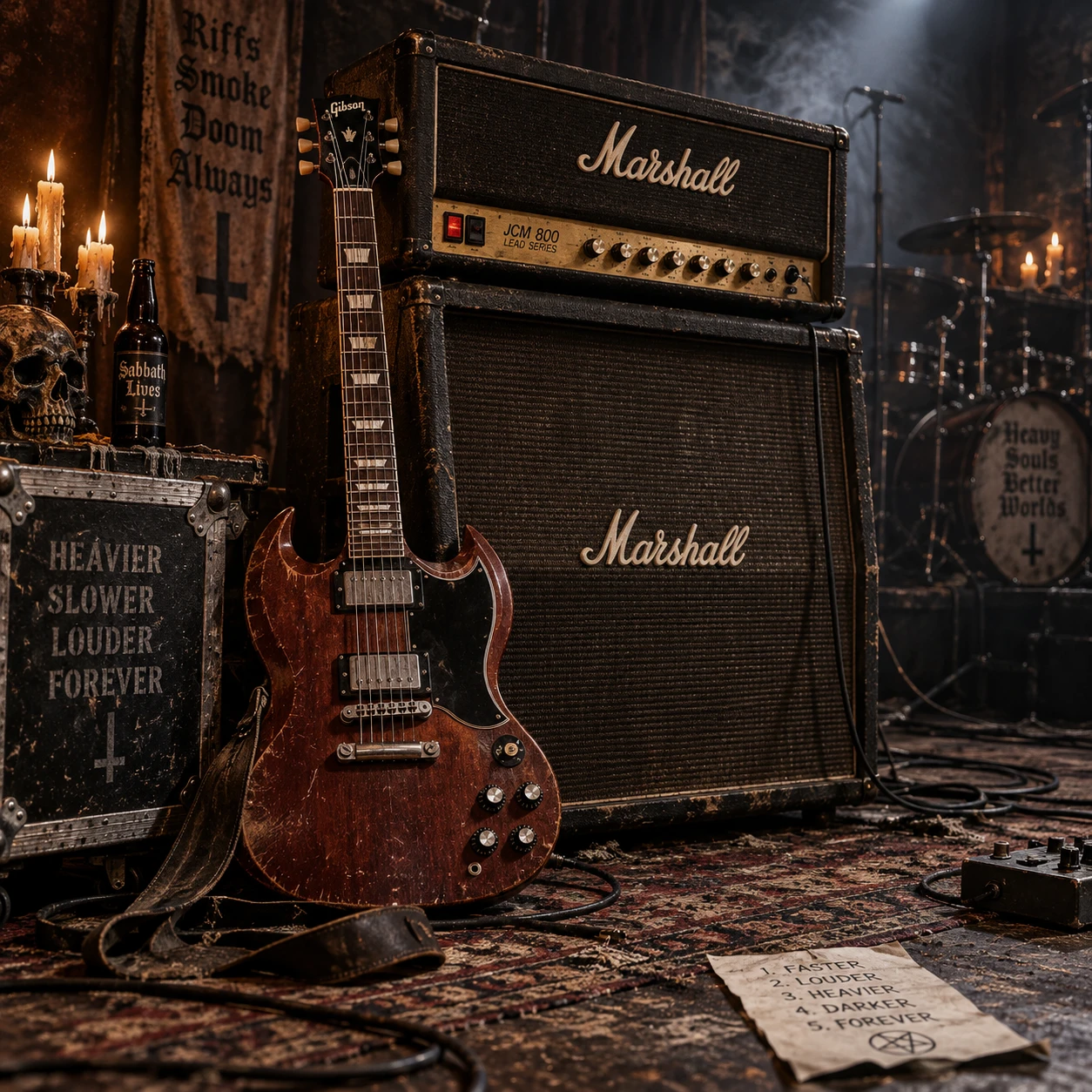
Before doom metal had a name, Black Sabbath were already building its central feeling: music that moves with weight, turns volume into atmosphere, and makes darkness sound almost physical. Their early records did not establish every later branch of doom, but they gave the genre a powerful starting point through slow passages, heavy guitar riffs, and lyrics shaped by fear and uncertainty.
Tony Iommi’s guitar work sits at the center of that legacy. Bands such as St. Vitus later took elements of Sabbath’s approach and made them their own, helping traditional doom emerge as a distinct style. The influence is easiest to hear in the records and songs where Sabbath let a riff breathe rather than rushing toward the next change.
How Black Sabbath Helped Shape Doom’s Sound
Black Sabbath helped shape doom’s sound by pairing slow pacing, heavy riffs, and ominous atmosphere. Those choices made each musical phrase feel consequential, laying groundwork that later doom metal bands developed in different ways.
Much early rock and blues-based music relied on forward motion: a strong backbeat, compact phrases, and a sense of release. Sabbath could use a slower pulse to create suspense instead. In the title track of Black Sabbath, pauses and repeated figures give the music room to feel uneasy. The effect comes from arrangement as much as volume; silence and restraint matter as much as distortion.
The band also made heaviness feel physical. Guitar, bass, and drums often lock into a blunt, deliberate groove, while riffs repeat long enough to settle into the listener’s attention. Doom metal would later stretch this approach further, sometimes making songs much slower or more expansive. But Sabbath’s template was not simply “play slowly.” It was to make the pace, tone, and repetition serve a shared atmosphere.
That distinction matters. A slow song is not automatically doom metal, and Sabbath’s catalog includes brisker, more hard-rocking material. Their contribution lies in making deliberate, weighty music feel dramatic and complete, rather than like a temporary slowdown.
Tony Iommi’s Guitar Style and the Doom Riff
Tony Iommi’s guitar style gave doom metal a durable model for riffs that feel heavy, memorable, and physically grounded. His sound combined a dark tone with economical phrasing, so a few notes could carry the force of an entire section.
Iommi often built riffs from compact patterns, repeating them with small changes in emphasis or harmony. The listener can follow the shape immediately, yet the riff retains tension as it cycles. That balance—recognizable contour, uneasy mood—became central to traditional doom. Rather than filling every gap with notes, the guitar leaves space for the low end and drums to reinforce the impact.
His use of downtuned guitar also helped establish the sound’s low, thick register. Iommi adjusted his tuning after a hand injury, a practical change that became part of Sabbath’s distinctive sound. It would be misleading to reduce his influence to tuning alone: articulation, timing, tone, and the way the riff sits against the rhythm section all matter. The result is a guitar voice that sounds heavy without relying on speed or technical display.
For a useful listening exercise, follow one riff through a song and notice what changes around it. The drums may shift the groove, the bass may strengthen its outline, or the vocal may add a new layer of menace. Doom guitarists inherited a writing method, not just a preset tone.
Darkness, Dread, and Lyrical Themes
Black Sabbath brought dark lyrical themes and foreboding moods into heavy music in a way that later doom bands could deepen. Their songs draw on fear, conflict, death, and the supernatural, giving the music emotional stakes beyond sheer loudness.
The opening song on Black Sabbath uses a sense of supernatural threat, while other early tracks turn toward war, social unease, or personal turmoil. These subjects helped the band create a world that matched the guitar’s ominous weight. Darkness in Sabbath is not always theatrical fantasy; it can also reflect real anxiety about violence, power, and human behavior.
Doom metal inherited that freedom to treat heaviness as emotional expression. Some bands emphasize horror imagery, while others explore grief, isolation, or spiritual doubt. The mood can be bleak, but it is not identical across the genre. Sabbath’s example showed that a heavy riff could support a story or an atmosphere, not merely a hard-rock chorus.
There is a useful contrast here: the music can feel oppressive while remaining compelling to hear. Repetition draws the listener into the tension, and changes in dynamics offer moments of release. That contrast helps explain why doom can feel meditative as well as dark.
Albums and Songs That Set the Foundation
Black Sabbath and Master of Reality are especially useful starting points for hearing the band’s influence on doom metal. Together, they show the early development of ominous atmosphere, slow-moving riffs, and lower, thicker guitar textures.
The 1970 debut, Black Sabbath, makes the case through its title track. Its deliberate pacing, dramatic pauses, and descending guitar figure create a sense of dread before the song expands into heavier motion. “N.I.B.” offers another angle: a memorable bass-led opening and a more rolling groove show that Sabbath’s heaviness could be catchy as well as ominous.
On 1971’s Master of Reality, the sound becomes denser and more low-slung. “Sweet Leaf” opens with a distinctive cough before settling into a chunky, loping riff; “Children of the Grave” combines a forceful pulse with an urgent, darker atmosphere. “Into the Void” is an especially strong example for doom listeners, with a slow, weighty central riff and a spacious feel that lets each shift register.
These albums are not doom records in the later genre sense. Sabbath’s music ranges across blues-based hard rock, heavy metal, and more experimental passages. They matter because they make the ingredients easy to hear in context, before later bands sharpened them into a more defined style.
From Sabbath’s Blueprint to Doom Metal
Later doom metal bands carried forward parts of Sabbath’s approach while adapting it to new scenes and artistic aims. St. Vitus, for example, became an important name in traditional doom by embracing slow, heavy riffs and a bleak, direct presentation without simply reproducing Sabbath’s songs.
Doom metal developed over time, rather than appearing fully formed after one album. Musicians drew on Sabbath’s early heaviness alongside other influences, then emphasized particular qualities: slower tempos, sustained guitar tone, longer compositions, or more extreme vocal styles. St. Vitus helped keep a stripped-down, riff-centered form of doom audible in the American underground. Other bands pursued different sounds, proving that a shared foundation does not require a single formula.
When tracing influence, it helps to separate an audible resemblance from a documented claim of direct inspiration. A band may share Sabbath’s low tuning or deliberate riffing without following the same path or citing the same influences. The strongest connection is often musical: a recurring riff that anchors a song, a restrained tempo that builds tension, or a dark atmosphere carried by the whole arrangement.
That approach also offers a practical way to explore the genre. Start with Sabbath’s early albums, then compare a traditional doom record by St. Vitus. Listen for what remains—weight, repetition, atmosphere—and what changes, such as vocal delivery, production, or song length.
Sabbath’s Legacy Across Doom’s Traditions
Black Sabbath’s influence reaches across doom metal, but the genre developed in multiple directions and cannot be reduced to one band. Their lasting contribution is a set of musical possibilities: slow weight, dark atmosphere, and riffs that carry a song.
Traditional doom makes the connection easiest to hear, especially in its emphasis on heavy guitar riffs and deliberate pacing. Other doom subgenres have expanded the palette with distinct approaches to speed, distortion, vocals, and song structure. Sabbath is a foundational reference point, not a complete explanation for every band or style that followed.
For listeners, the best starting points are simple: hear the title track from Black Sabbath, then explore “Into the Void” from Master of Reality. Pay attention to how the band uses space, repetition, and tone. Those choices still resonate because they make heaviness feel considered. Doom metal has changed enormously, but the power of a well-shaped riff remains one of its clearest links to Sabbath.