Doom Metal Subgenres: From Traditional to Funeral and Beyond
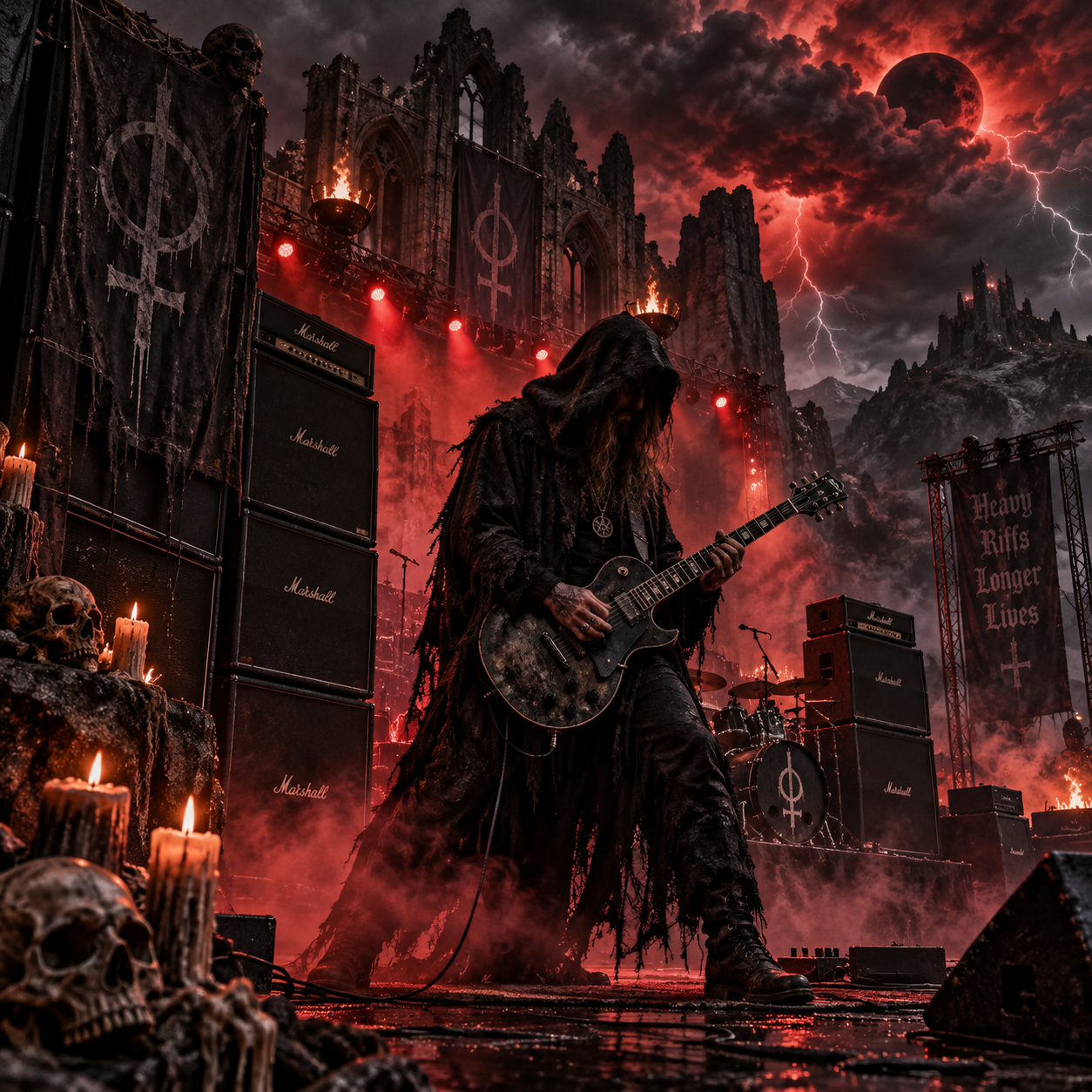
Doom metal is built around weight, patience, and emotional intensity. Its riffs move with deliberate force, its guitar tones often sound enormous, and its lyrics dwell on mortality, despair, isolation, grief, or spiritual unease. Yet doom is far from one uniform style. Traditional doom, epic doom, funeral doom, death-doom, sludge metal, and stoner doom each shape that heaviness differently.
What Defines Doom Metal?
Doom metal combines heavy riffs, slow or deliberate tempos, dark atmosphere, and themes of suffering or mortality. The genre’s power comes from making musical space feel physically heavy, allowing a single chord or repeated figure to carry more emotional force than a fast, densely packed arrangement.
Many doom bands draw on Sabbath-influenced riffs: blues-rooted guitar patterns, tritone tension, thick distortion, and a strong relationship between bass and guitar. Slow tempos are common, but speed alone does not define doom. A mid-paced song can still feel deeply doom-laden if its riffing, tone, and mood create a sense of dread.
Three listening questions help separate the major branches:
- How does it move? Does it stomp, crawl, groove, or barely move at all?
- How does it speak? Are the vocals clean, dramatic, harsh, or buried in the mix?
- What world does it create? Is the atmosphere bluesy, heroic, psychedelic, diseased, or completely desolate?
Those questions are more useful than treating every slow metal record as the same. Tempo is the doorway into doom, while tone, songwriting, and atmosphere determine which room you enter.
Traditional Doom Metal
Traditional doom metal is the classic, riff-driven form of doom, rooted in bluesy heaviness, ominous vocals, and a strong connection to early heavy metal. It usually feels direct and physical: the guitar establishes a memorable figure, the drums reinforce its march, and the vocals deliver the lyric with grave authority.
Traditional doom developed from the darker side of early heavy metal, particularly the sound associated with Black Sabbath. Its defining ingredients include thick but intelligible distortion, prominent bass, deliberate drumming, and guitar parts that favor menace over technical display. The best riffs often sound simple at first, then reveal subtle changes in phrasing or harmony.
Vocals may be clean, but they are rarely casual. Singers use a mournful, commanding, or haunted delivery that matches lyrics about death, war, occult imagery, addiction, and personal ruin. Song structures remain comparatively accessible, often using recognizable verses, choruses, instrumental breaks, and lead-guitar passages.
For a new listener, traditional doom is usually the clearest starting point. It offers the genre’s core language without requiring an immediate adjustment to extreme vocal styles or very long, minimalist compositions. The trade-off is that listeners seeking psychedelic drift or overwhelming ambience may find it more conventional than other doom subgenres.
Epic Doom Metal
Epic doom metal expands traditional doom with dramatic vocals, grand arrangements, melodic guitar work, and themes drawn from myth, fantasy, history, or heroic tragedy. Its songs retain the genre’s weight while reaching for a larger emotional and narrative scale.
Epic doom often uses clean vocals with a pronounced theatrical quality. The singer may sound like a narrator addressing an army, a doomed king, or a figure from an ancient legend. Guitars remain heavy, but melodies become especially important. Harmonized leads, ringing chord changes, and emphatic transitions give the music a sense of ceremony.
The pacing can range from slow marches to forceful mid-tempo passages. Compared with traditional doom, epic doom commonly emphasizes contrast: a restrained verse may open into a soaring chorus, or a simple riff may lead into an extended melodic solo. The atmosphere is dark, but it can also feel majestic rather than purely defeated.
That distinction matters. Traditional doom often sounds like a warning from a basement amplifier; epic doom can feel like the soundtrack to a ruined citadel. Start here if you enjoy clean vocals, memorable melodies, dramatic songwriting, and lyrics that turn despair into legend. Some listeners may find the theatrical delivery too grand, especially if they prefer raw, intimate bleakness.
Funeral Doom and the Most Extreme Forms of Slowness
Funeral doom is the slowest and most spacious major doom metal subgenre, using minimal movement, extended song structures, and oppressive atmosphere to express grief or existential desolation. Its music often feels less like a conventional song and more like a prolonged descent through sound.
Funeral doom guitars may sustain a chord for several measures before changing. Drums can be sparse and ritualistic, while low-tuned riffs create enormous gaps between each impact. Some bands add keyboards, distant clean guitars, orchestral textures, or choral sounds, but these elements serve the atmosphere rather than decorative complexity.
Vocals vary. Deep growls, cavernous roars, mournful clean singing, and distant whispers all appear across the style. Lyrics commonly focus on bereavement, death, emptiness, spiritual collapse, and the inability to escape time. The emotional effect depends on patience: a passage may repeat long enough for its rhythm to stop feeling like a beat and start feeling like an environment.
Funeral doom rewards focused listening, especially with headphones and enough uninterrupted time for a full track or album. It is a poor fit for anyone seeking immediate hooks or constant motion. Its limitation is also its identity: extreme repetition can produce transcendence for one listener and monotony for another.
Death-Doom, Sludge Doom, and Stoner Doom
Death-doom, sludge doom, and stoner doom share doom’s heaviness but emphasize different musical traits: death metal brutality, abrasive aggression, or fuzzy psychedelic groove. These styles show how the genre branches once its central weight meets another metal tradition.
Death-Doom
Death-doom combines doom’s slow, mournful pacing with death metal’s down-tuned guitars, growled vocals, dense distortion, and darker harmonic language. Songs may alternate between crushing slow sections and faster death-metal passages. The atmosphere often feels diseased, tragic, or claustrophobic rather than heroic.
Choose death-doom if you want extreme heaviness and harsh vocals but still value melody, sorrow, and spacious songwriting. The vocal intensity can make it less approachable than traditional doom, while the changes in pace give it more movement than funeral doom.
Sludge Doom
Sludge metal, including sludge doom, blends doom’s weight with hardcore punk’s confrontational energy. Riffs are frequently filthy, dissonant, and abrasive, while vocals may shift between shouted rage, harsh screams, and rough singing. The groove feels unstable, as if the band is dragging a damaged machine through mud.
Its lyrical themes often include alienation, violence, poverty, addiction, and social decay. Sludge is a useful choice for listeners who want doom’s low-end pressure without polished production or ceremonial restraint. The compromise is reduced clarity: distortion and feedback may deliberately obscure the individual parts.
Stoner Doom
Stoner doom emphasizes thick fuzz, swinging grooves, blues influence, psychedelic color, and the sensation of a riff expanding in slow motion. Its tempos are not always the slowest, but the guitar tone and repetition create a hazy, hypnotic pull.
Compared with traditional doom, stoner doom often sounds warmer, looser, and more spacious. Extended solos, wah-heavy textures, and jam-oriented arrangements are common. It suits listeners who enjoy groove and psychedelic atmosphere, although those seeking stark grief or rigidly ominous riffing may find it too relaxed.
How Doom Metal Subgenres Overlap and Evolve
Doom metal subgenres overlap because they share a common foundation of heavy tone, deliberate pacing, and emotional intensity. A band can use traditional doom riffs, death-doom vocals, stoner fuzz, and post-metal dynamics in the same song without fitting neatly into one category.
Hybrid writing often works through a simple progression:
- A band begins with a doom-centered riff, usually slow and low.
- Another influence changes the texture, vocal style, or arrangement.
- The resulting music develops a distinct identity through atmosphere and songwriting.
Doom-death and death-doom can introduce blast beats or faster tremolo passages. Blackened doom adds black metal’s icy guitar language and hostile vocal delivery. Post-metal doom builds long arcs through repetition, crescendo, and layered effects. Progressive doom may use unusual meters, instrumental development, or multi-part compositions, while psychedelic doom stretches riffs into immersive, improvisational spaces.
Genre labels are maps, not legal definitions. They help listeners predict a record’s mood, but they cannot replace listening. Two bands labeled stoner doom may differ more in vocal approach and production than either does from a traditional doom band. Pay attention to the complete combination of riff movement, vocal character, guitar tone, and atmosphere.
Choosing a Doom Metal Subgenre to Explore
Choose a doom metal subgenre by matching your preferred vocals, level of heaviness, groove, atmosphere, and songwriting scale. The following guide offers a practical route into the style without forcing every listener through the same entry point.
- Want classic riffs and clean, ominous vocals? Begin with traditional doom metal.
- Prefer dramatic melodies and heroic or mythological themes? Try epic doom metal.
- Want the harshest vocals and death-metal intensity? Explore death-doom.
- Need abrasive groove, feedback, and emotional anger? Sludge doom may fit best.
- Enjoy fuzz, blues, repetition, and psychedelic color? Start with stoner doom.
- Seek maximum atmosphere, grief, and slow minimalism? Give funeral doom your full attention.
A useful listening test is to sample one full song from three contrasting styles rather than playing short clips from ten bands. Notice whether you follow the riff, the vocal line, or the atmosphere first. If you want a band-oriented listening experience, also consider production: a raw recording can make sludge and traditional doom feel immediate, while a spacious mix can reveal the layered detail in funeral or post-metal-influenced doom.
There is no correct first choice. Doom metal’s appeal lies in its range, from the blunt force of a Sabbath-influenced riff to the near-motionless gravity of funeral doom. Let your preferred kind of heaviness guide the next record.
Frequently Asked Questions About Doom Metal Subgenres
What is the slowest doom metal subgenre?
Funeral doom is generally considered the slowest major doom metal subgenre. Its extended sustains, sparse drum patterns, and minimal riff changes create an intentionally suspended sense of time.
What is the difference between traditional doom and funeral doom?
Traditional doom is usually more riff-driven and song-oriented, with clear vocal lines and blues-influenced heavy metal structures. Funeral doom slows those elements dramatically, prioritizing atmosphere, repetition, grief, and existential desolation.
Is sludge metal a doom metal subgenre?
Sludge metal is closely related to doom but also draws heavily from hardcore punk. Some sludge bands are strongly doom-based, while others use faster tempos, shouted vocals, and abrasive punk energy that place them outside a strict doom classification.
What makes stoner doom different from traditional doom?
Stoner doom generally uses fuzzier guitar tones, looser grooves, blues and psychedelic influences, and more spacious or jam-oriented arrangements. Traditional doom tends to sound more ominous, structured, and directly connected to early heavy metal.
Which doom metal subgenre is best for beginners?
Traditional doom is often the easiest starting point because its riffs, vocals, and song structures are relatively clear. Stoner doom is another welcoming entry point for listeners who prefer groove and fuzz, while funeral doom is better saved for those already comfortable with very slow, atmospheric music.