Doom Metal and the Occult: Exploring Esoteric Influences
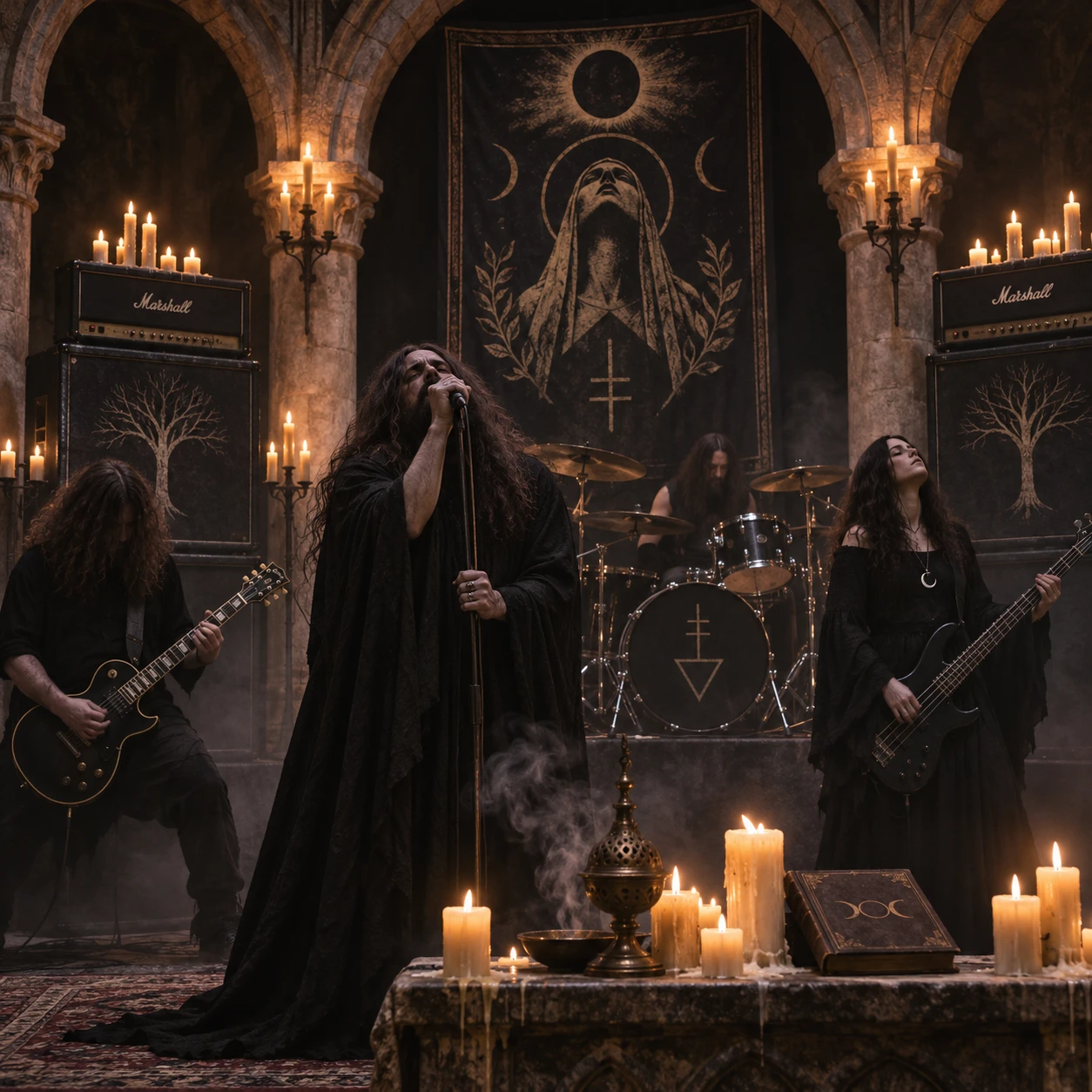
Doom metal often feels like music from a place where time has slowed and ordinary explanations no longer hold. Its crushing riffs, deliberate pace, and dark atmosphere can give occult and esoteric ideas room to unfold, from lyrics about hidden knowledge to artwork rich with symbolic imagery.
That connection is an artistic tendency, not a rule. Many doom bands explore grief, nature, politics, or personal struggle without occult themes, while others draw on mysticism and ritual as part of a carefully built musical world. Listening closely means considering how the sound, words, and visuals work together, rather than treating an image or lyric as proof of a musician’s private beliefs.
Why Doom Metal Connects with the Esoteric
Doom metal connects naturally with esoteric themes because its weight, patience, and atmosphere create space for mystery. Slow tempos and sustained heavy riffs can make a song feel contemplative, immense, or ceremonial, giving listeners time to sit with ideas that faster music might pass by.
Esotericism generally concerns knowledge or practices understood as hidden, inward, or accessible through particular study and experience. Doom metal does not have one fixed relationship with esotericism, but its musical language often suits themes of transformation, the unknowable, mortality, and spiritual searching. A long-held chord can feel unresolved; a repeated figure can suggest both persistence and confinement.
The genre’s emotional range matters, too. Distortion and volume provide physical force, while long silences, droning notes, and gradual changes invite attention. Together, these choices can turn a song into a space for reflection. A listener may hear a sense of awe or unease without accepting any literal supernatural explanation.
That distinction keeps interpretation grounded. The occult is one source of imagery and ideas among many, and the same atmosphere can support very different meanings. In one song, darkness may signal spiritual inquiry; in another, it may simply give grief or isolation a sound.
Occult Themes in Doom Metal
Occult themes in doom metal commonly include ritual, hidden knowledge, mysticism, and the supernatural. Bands use these subjects to explore secrecy, power, transformation, fear, or the limits of human understanding.
Ritual can appear as a ceremony in a lyric, a repeated invocation, or a sense of deliberate action built into the music. References to old texts, forbidden teachings, spirits, or symbolic journeys may draw on occult traditions, fantasy, folklore, or a mixture of sources. The context matters: a title alone rarely explains what a song means.
Mysticism often offers a more inward focus. Lyrics may describe visions, altered states, the search for unity, or contact with something beyond everyday perception. Other songs use supernatural figures as metaphors for addiction, obsession, authority, or emotional change. A monster can be a character, a symbol, or both.
When interpreting these themes, consider three questions: What does the song actually say? How does the music shape its mood? What does the band’s broader artistic context suggest? This approach avoids reducing every candle, spell, or shadow to the same meaning.
Sound as Atmosphere and Ritual
Slow tempos, repetition, distortion, and dynamic shifts help doom metal create an esoteric atmosphere by making sound feel immersive and deliberate. These techniques can suggest meditation or ceremony, though they do not automatically make a song occult.
A repeated riff may resemble a chant because it returns with little change, gradually building tension through duration rather than speed. Low tunings and thick distortion give the sound physical weight, while sustained notes blur the boundary between melody and drone. The effect can feel hypnotic, oppressive, or grounding, depending on the arrangement and performance.
Dynamics add another layer. A quiet passage before a full-band entrance can make the return of the heavy riff feel like a release or an eruption. Long introductions and instrumental sections also give listeners time to notice small changes in tone, rhythm, and texture. In a live setting, lighting, pacing, and the band’s use of silence can reinforce that focused mood.
Repetition has limits. If a band holds one volume and one riff for too long without developing the idea, atmosphere can become flat rather than immersive. A useful arrangement question is: what changes while the central figure repeats? The answer might be a new vocal layer, a shifting drum pattern, altered guitar tone, or a gradual rise in intensity.
Symbols, Lyrics, and Visual Identity
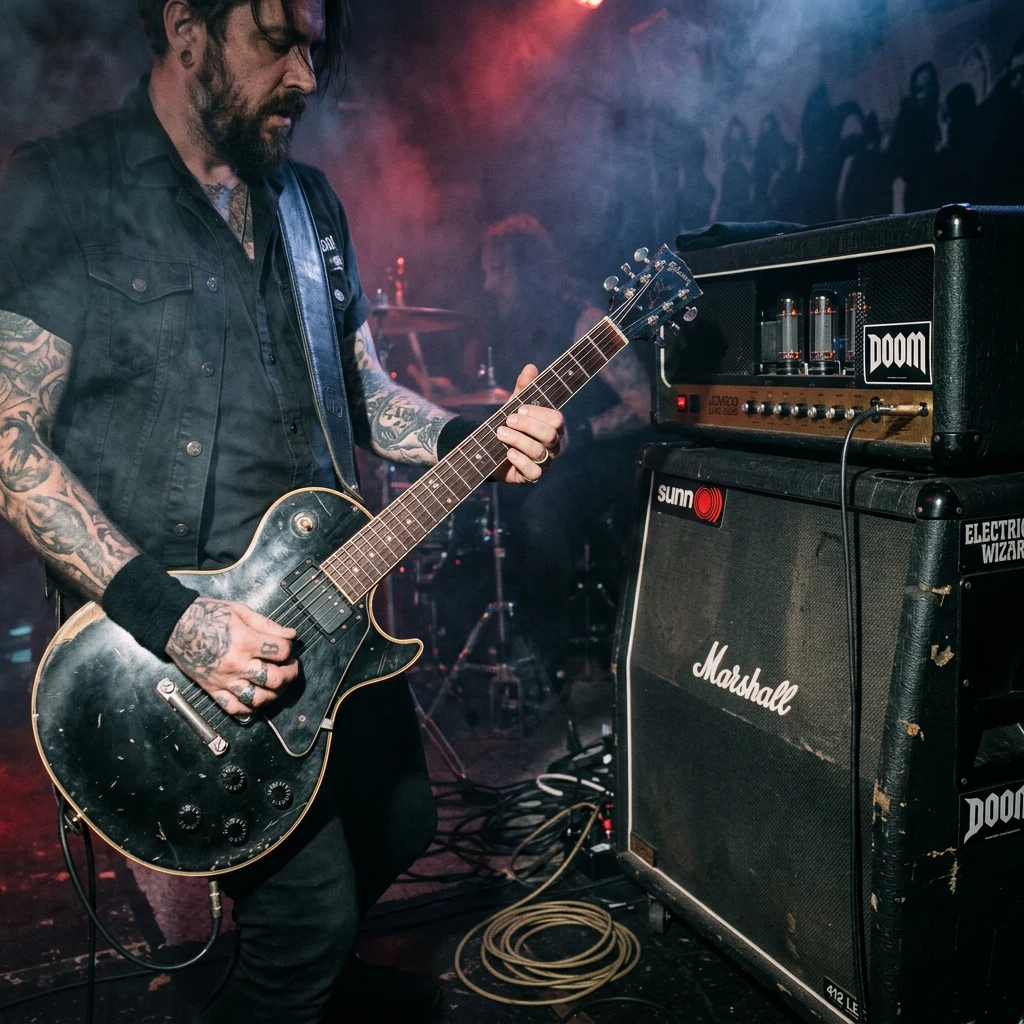
Occult symbolism reaches listeners through lyrics, album artwork, typography, and stage presentation. These elements can establish a shared visual world, but their meaning depends on how the band uses them across its work.
Artwork might include celestial diagrams, ritual objects, mythic figures, ancient-looking scripts, or contrasts between light and shadow. Such images can signal a mood or invite interpretation without documenting an actual practice. Repeated symbols across a record may connect its songs into a larger story, while a single emblem may function mainly as striking design.
Lyrics offer more direct clues, though they still benefit from close reading. Pay attention to who is speaking, what changes over the course of the song, and whether the language is literal, symbolic, or deliberately ambiguous. A first-person account of a vision, for example, might be a dramatic voice rather than a statement of the songwriter’s experience.
Live presentation can extend this identity through costumes, lighting, props, or projected images. Cohesion matters more than quantity. When one clear symbol returns in a lyric, on a sleeve, and in the stage design, it can carry more meaning than a crowded collection of borrowed signs.
Artistic Influence Versus Literal Belief
Occult references in doom metal do not, by themselves, prove that a band follows an occult religion or practice. Musicians may use esoteric ideas as artistic material, personal philosophy, storytelling, visual design, or some combination of these.
Artists draw on many sources: religious history, folklore, literature, horror, personal experience, and invented mythology. A band may research a symbol to use it thoughtfully, adapt it into fiction, or deliberately leave its meaning open. Listeners should distinguish what the work presents from what its creators have said about themselves.
This distinction also helps avoid sensationalism. A dark cover or theatrical performance can invite curiosity, but it is not reliable evidence of private conduct. If a band has discussed its influences in interviews or liner notes, those materials provide a firmer basis for interpretation than speculation about imagery.
There is a creative trade-off here. Familiar occult symbols communicate quickly, but overuse can make a band’s identity feel generic or obscure the ideas in its music. Specific, considered choices may take longer to understand, yet they give listeners more to return to.
Making Occult Influence Meaningful
A band can make occult influence meaningful by connecting its symbols to the music’s central ideas. Start with the emotional or narrative purpose, then choose sounds, lyrics, and visuals that serve it.
A practical approach is to work from the inside out:
- Choose the subject. Decide whether the song explores transformation, fear, spiritual searching, power, or another clear theme.
- Set the musical behavior. Use tempo, repetition, distortion, and dynamics to shape how that subject should feel. A measured pulse might suggest ceremony; unstable timing could create unease.
- Give imagery a job. Select symbols that deepen the theme, and learn their context rather than using them as decoration.
- Check the complete experience. Compare lyrics, arrangement, artwork, and performance. If they point in different directions, decide whether the tension is deliberate.
The goal is coherence, not a claim to authenticity or a test of belief. A doom metal band can approach occultism as a field of questions, a visual vocabulary, or a fictional world. The strongest result gives listeners something to interpret while letting the riffs, words, and atmosphere carry their own emotional weight.